
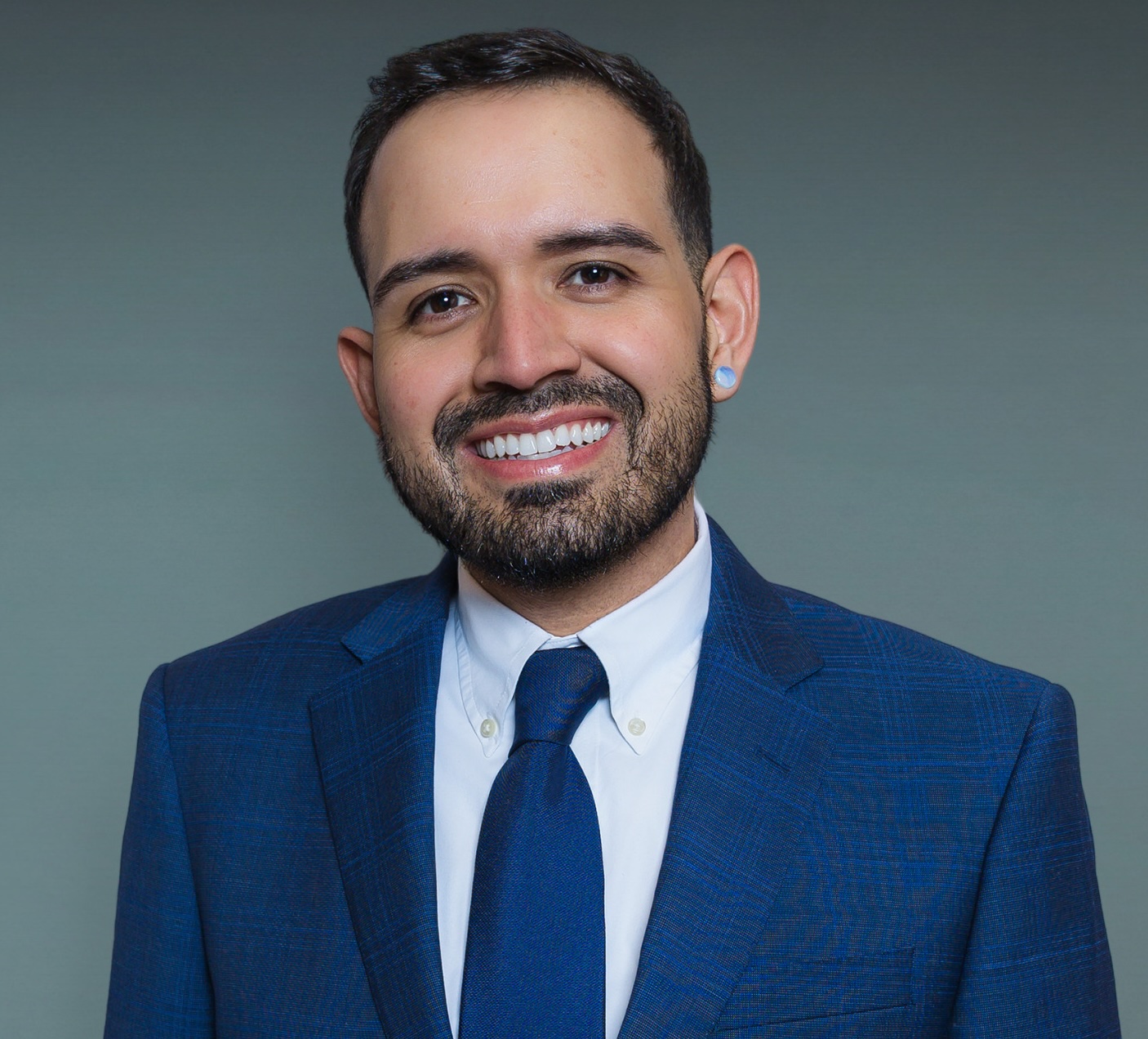
Director of Research- NYU Langone Concussion Center
Assistant Professor- Department of Rehabilitation Medicine
New York University Grossman School of Medicine
Dr. Hector Arciniega is the Director of Research at the NYU Langone Concussion Center and an Assistant Professor in the Department of Rehabilitation Medicine at NYU Grossman School of Medicine.
Dr. Arciniega is a neuroscientist whose research seeks to understand how the human brain responds and adapts to neurological injury, and why individuals with seemingly similar exposures can experience profoundly different long-term outcomes. His work lies at the intersection of human neuroscience, neuroimaging, brain physiology, and neurodegeneration, with a particular emphasis on identifying the biological mechanisms that shape neurological vulnerability and resilience.
At NYU Grossman School of Medicine, Dr. Arciniega leads an interdisciplinary research program that combines advanced neuroimaging, quantitative neuroanatomy, computational approaches, molecular biomarkers, and clinical investigation. His lab examines how mechanical injury interacts with the structural organization and physiological state of the brain to influence cognitive function, neurological recovery, and susceptibility to neurodegenerative processes. Central to this work is the recognition that neurological outcomes cannot be explained by injury exposure alone, but must also be understood in the context of the biological systems that maintain and regulate brain health.
A major focus of his research has been understanding the long-term consequences of repetitive head impacts in individuals with histories of participation in contact and collision sports. Through investigations involving former professional and collegiate American football players, Dr. Arciniega has contributed to advances in characterizing the neuroanatomical consequences of cumulative head impact exposure. His work has examined alterations in cortical morphology, subcortical structures, ventricular anatomy, white matter microstructure, and the cavum septum pellucidum, providing new insights into how repetitive mechanical forces may influence the organization and integrity of the human brain. These investigations have contributed to efforts to identify neuroimaging markers of repetitive neurotrauma and clarify their relationships with aging, cognitive function, and neurodegenerative vulnerability.
An important extension of Dr. Arciniega's research examines how the biological state of the brain at the time of injury may influence subsequent neurological outcomes. This question has motivated a growing research program focused on maternal brain health and neurological injury during pregnancy. Pregnancy is accompanied by extensive neurobiological adaptations involving brain structure, neuroendocrine signaling, cerebrovascular physiology, immune regulation, and neural plasticity. Yet how these changes influence the brain's response to injury remains largely unknown. His lab investigates the neurological consequences of traumatic brain injury during pregnancy, including injuries associated with intimate partner violence, while also studying the natural trajectory of maternal brain adaptations. Through population-level epidemiology, longitudinal neuroimaging, and translational approaches, this work seeks to understand how pregnancy-associated physiological changes interact with neurological injury and shape maternal brain health during pregnancy and the postpartum period.
Together, these research directions reflect a broader scientific objective: to understand how neurological exposures, individual biological characteristics, and physiological regulation interact to determine the brain's capacity for adaptation, recovery, and long-term resilience. By studying repetitive neurotrauma and pregnancy as complementary contexts, Dr. Arciniega's lab seeks to identify fundamental principles governing neurological vulnerability across different stages and physiological states of adult life.
Beyond his independent research program, Dr. Arciniega plays an active role in advancing collaborative neuroscience. He serves as Co-Leader of the ENIGMA Sports-Related Brain Injury Working Group, an international consortium focused on harmonizing neuroimaging approaches and investigating the neurological consequences of concussion and repetitive head impacts across diverse populations. As Director of Research at the NYU Langone Concussion Center, he also works to strengthen the integration of clinical care, scientific discovery, and translational research. He serves as a training faculty member in the Institute for Translational Neuroscience and the Vilcek Institute of Graduate Biomedical Sciences and contributes to the broader scientific community through NIH grant review, institutional leadership, and interdisciplinary collaborations.
Before joining the faculty at NYU Grossman School of Medicine, Dr. Arciniega completed his postdoctoral training at Harvard Medical School under the mentorship of Drs. Martha E. Shenton and Sylvain Bouix. His research during this period focused on understanding the long-term neurological consequences of repetitive head impacts through multimodal neuroimaging and neurobehavioral assessment. He completed his doctoral training at the University of Nevada, Reno under the mentorship of Dr. Marian Berryhill, where he investigated the cognitive and neural consequences of concussion and aging, particularly alterations in working memory and functional brain organization. His training across cognitive neuroscience, neuroimaging, and clinical neurotrauma established the interdisciplinary foundation of his current research program.
Dr. Arciniega's scientific contributions have been recognized through numerous national honors and competitive research awards, including the NIH/NINDS D-SPAN F99/K00 Award, the NIH Loan Repayment Program Award, the Rainwater Charitable Foundation Tau Leadership Award, Harvard's Mind Brain Behavior Young Investigator Award, the Burroughs Wellcome Fund Postdoctoral Diversity Enrichment Program Award, the Black Men's Brain Health Emerging Scholars Fellowship, and the Henry Grass Rising Star in Neuroscience Award. He has received federal and foundation support for research investigating repetitive neurotrauma, neurodegeneration, and neurological vulnerability. His work has appeared in leading scientific and medical journals, including Nature Medicine, Brain, Alzheimer's & Dementia, Brain Communications, JAMA Network Open, Communications Medicine, and Neurology Clinical Practice.
Through his research and leadership, Dr. Arciniega seeks to advance a more integrated understanding of the human brain, one that recognizes neurological health as the product of interactions among brain structure, physiological regulation, life experience, and biological adaptation.
M.S., Clinical Investigation
Primary Advisor: Dr. Simona C. Kwon, DrPH, MPH
Equity, Diversity, Inclusion, and Belonging Leadership Graduate Certificate
Department of Psychology- Memory and Brain Laboratory
Ph.D., Neuroscience
Dissertation: Echoes of concussion: Behavioral and neural changes after injury.
Primary Advisor: Prof. Marian Berryhill
B.S. Neuroscience, Minor in Psychology, and Minor/Certificate in Gerontology
NINDS: Functional Brain Network Alterations Associated with Cumulative Repetitive Head Impact Exposure
Grant ID: 1 R21 NS157997-01
PI: Dr. Hector Arciniega
NICHD: The Maternal Brain After Traumatic Brain Injury
Grant ID: 1R01 HD126800-01
PI: Dr. Hector Arciniega
NINDS: Neuroanatomical and White Matter Signatures of Cumulative Repetitive Head Impact Exposure
Grant ID: 1R01NS156955-01
PI: Dr. Hector Arciniega
NIH Director’s New Innovator Award (DP2): A Physiological Framework for Neurodegeneration Following Repetitive Head Impacts
Grant ID: 1DP2OD043459-01
PI: Dr. Hector Arciniega
Department of Defense (DoD): Pocket-Sized Multi-System Mobile Medical Imaging Device for TBI Triage by Non-specialist/Untrained-Operators
Grant ID: BA260140
PI: Dr. Hector Arciniega
NICHD: Child Health Impacts of Injury in Pregnancy (CHIIP)
Grant ID: 1R01HD123105
PIs: Dr. Magdalena Janecka, Dr. Akhgar Ghassabian; Co-I: Dr. Hector Arciniega
Alzheimer's Association Research Grant to Promote Diversity - New to the Field: Head Impacts & Neurodegeneration
PI: Dr. Hector Arciniega
NINDS/NIMH: Exploratory Neuroscience Research Grant R21: Understanding the neuroanatomical abnormalities of repetitive head impacts.
Grant ID: NS140565
PI: Dr. Hector Arciniega
NIH/ NINDS: Blueprint Diversity Specialized Predoctoral to Postdoctoral Advancement in Neuroscience (D-SPAN) Award K00: Understanding the Cognitive and Neural Consequences of Repetitive Head Impacts.
Grant ID: K00NS113419
PI: Dr. Hector Arciniega, Mentors: Prof. Martha Shenton and Prof. Sylvain Bouix
NIH/NINDS Blueprint Diversity Specialized Predoctoral to Postdoctoral Advancement in Neuroscience (D-SPAN) Award F99: Understanding the Cognitive and Neural Deficits Associated with mTBI: A Resting-State Study.
Grant ID: F99NS113419
PI: Hector Arciniega, Mentors: Prof. Marian E. Berryhill & Prof. Gideon Caplovitz
Graduate Student Association Research Grant Program: Compensation Restoration: How does tDCS Enhance Visual Working Memory?
PI: Hector Arciniega, Mentor: Prof. Marian E. Berryhill
ENIGMA Sports-Related Injury Group
NYU-Steinhardt School of Culture, Education, and Human Development, Department of Occupational Therapy
NYU Summer Undergraduate Research Program (SURP), Vilcek Institute of Graduate Biomedical Sciences
American College of Sports Medicine (ACSM) Symposium Speaker, Salt Lake City, Utah
T32 Stuart T. Hauser Research Training Program, Harvard Medical School
MoCA Talk #25, MoCA Cognition (Virtual)
Careers in Academic Science (PSY 742), University of Nevada, Reno
Grand Rounds: Orthopedic Medicine, NYU Grossman School of Medicine
Leon Thal Summit: Advancing the Science of CTE: Emerging Biomarkers for Research and Clinical Translation, Cleveland Clinic (Nevada)
Grand Rounds: NYU Langone Concussion Center
International Neurotrauma Conference- Cambridge, UK (symposium speaker)
Common Ground
NYU Grossman School of Medicine
11th Annual Concussion Conference
NYU Concussion Center- CME Lecture
Emerging Leaders in Neuroscience
Brain and Mind Research Institute at Weill Cornell Medicine
D-SPAN Panel - Transitioning to Faculty - Society for Neuroscience Annual Meeting
European Neurotrauma Organization - Munich, Germany (symposium speaker)
DIAGNOSE CTE Consortium - Annual Investigator Meeting
Flagstaff, AZ
Laboratory of Dr. Gerald Voelbel
New York University - Steinhardt School of Culture, Education, and Human Development - Department of Occupational Therapy
Rusk Rehabilitation Day - 75th Anniversary Celebration
New York University Grossman School of Medicine
Grass Foundation - Rising Star in Neuroscience Presentation
Marine Biology Laboratories
NIH/NINDS DSPAN BrainTrust
Department of Rehabilitation Medicine
New York University Grossman School of Medicine
Friedrich-Schiller-Universität Jena - Lehrstuhls für Klinische Psychologie
University of Nevada, Reno - Department of Psychology
International Neurotrauma Conference - Berlin, Germany (symposium speaker)
Chronic Traumatic Encephalopathy Center - DIAGNOSE CTE Consortium
Boston University School of Medicine - Boston, MA
Stuart T. Hauser Research Training Program in Biological and Social Psychiatry
Judge Baker Children’s Center/ Harvard Medical School
Chronic Traumatic Encephalopathy Center - DIAGNOSE CTE Consortium
Boston University School of Medicine - Boston, MA
Chronic Traumatic Encephalopathy Center - DIAGNOSE CTE Consortium
Boston University School of Medicine - Boston, MA
Stuart T. Hauser Research Training Program in Biological and Social Psychiatry
Judge Baker Children’s Center/ Harvard Medical School
University of Nevada, Reno - Department of Psychology
Laboratory for Cognition and Neural Stimulation
Perelman School of Medicine, University of Pennsylvania
University of Nevada, Reno - Department of Psychology
University of Nevada, Reno - Department of Psychology
Douglas County School District, Northern Nevada
University of Nevada, Reno - Department of Psychology
Douglas County School District, Northern Nevada
Douglas County School District, Northern Nevada
NYULangone Physician Focus- Brain Features in Living Athletes Linked to CTE Risk: https://physicianfocus.nyulangone.org/brain-features-in-living-athletes-linked-to-cte-risk/
NYULangone Health NewsHub- Distinct Brain Features in Football Players May TellWho Is at Risk of Long-Term Traumatic Disease: https://nyulangone.org/news/distinct-brain-features-football-players-may-tell-who-risk-long-term-traumatic-disease
DailyExpress-Shane Tamura’s well-planned mass shooting makes it unlikely he had CTE, expert says: https://www.the-express.com/news/us-news/178928/shane-tamura-cte-midtown-mass-shooting
Nevada Today
Evidence Shows Electrical Stimulation Can Improve Low Working Memory
Live Science
Concussions and Cognitive Skills: What’s the impact?

Department of Rehabilitation Medicine
240 East 38th Street
New York, NY 10016

